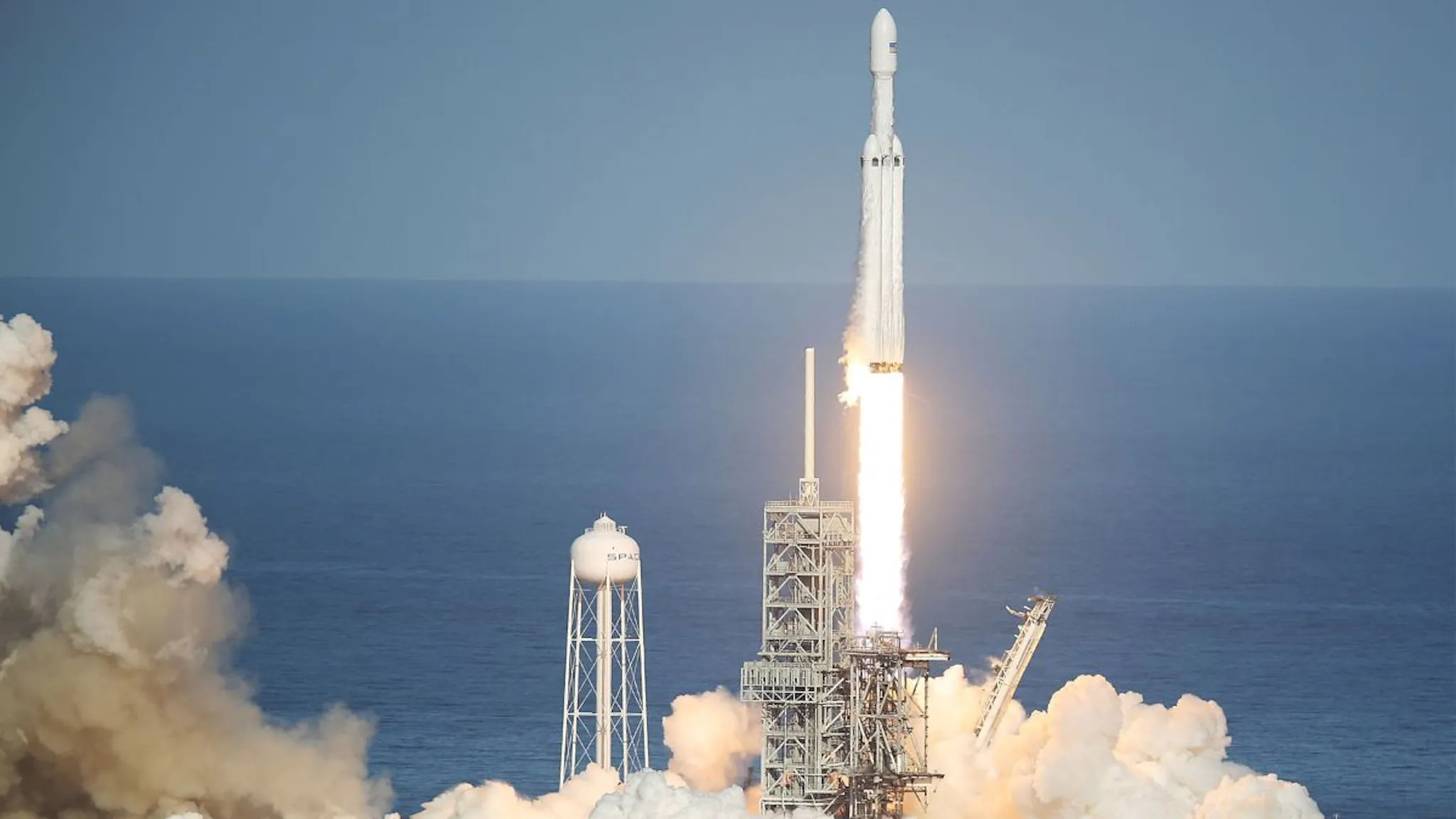
For months, anticipation has built around Cape Canaveral as SpaceX prepares to fire up its most powerful operational rocket since 2023. On April 27, the Falcon Heavy is scheduled to return to the skies after an 18-month pause—marking one of the most closely watched launches of the year. This isn’t just a routine mission. It’s a high-stakes demonstration of endurance, engineering, and ambition.
The launch window opens in the early evening, with live coverage beginning hours before liftoff. For space enthusiasts, defense analysts, and commercial satellite operators alike, this event signals more than just a rocket’s return—it could reshape access to geosynchronous orbits and influence national security payload strategies.
Why the Falcon Heavy’s Return Matters Now
Falcon Heavy isn’t just another rocket. With 5 million pounds of thrust at liftoff—equivalent to nearly eighteen 747 aircraft at full power—it remains the second most powerful launch vehicle currently flying, behind only NASA’s SLS. Its ability to carry over 60 metric tons to low Earth orbit or 13 metric tons to geostationary transfer orbit makes it uniquely suited for heavy military and deep-space missions.
Its absence since late 2023 left a gap in U.S. heavy-lift capacity. While Falcon 9 handles the bulk of SpaceX’s launches, it can't match the payload mass or volume demands of certain government and interplanetary missions. The return of Falcon Heavy fills that void—especially critical as the Pentagon increases reliance on resilient, responsive space architectures.
This April 27 mission, known internally as USSF-52, is funded by the U.S. Space Force and carries a classified payload believed to include experimental propulsion systems and space domain awareness technology. Unlike commercial satellite deployments, these missions often push hardware to its limits, testing deployment in high-energy orbits unreachable by smaller launchers.
Inside the April 27 Mission: Payload and Trajectory
Details on the primary payload remain tightly guarded. However, public filings with the Federal Aviation Administration and orbital trajectory projections suggest the rocket will deliver its cargo into a super-synchronous orbit—higher than standard geostationary belts—likely for long-duration surveillance or on-orbit testing.
What sets this mission apart isn’t just the secrecy, but the planned disposal maneuver. Unlike past Falcon Heavy flights where side boosters were recovered, both first-stage side boosters will be expended. This means they won’t return to landing zones or drone ships. Instead, they’ll detach and fall into the Atlantic Ocean downrange.
Why expend boosters on a company known for reusability? Simple: payload priority. By not reserving fuel for return, the rocket can deliver more mass to higher energy orbits. For national security missions, mission success outweighs booster recovery economics.
The center core, however, will attempt a drone ship landing—though success isn't guaranteed. High-energy ascent profiles stretch the limits of thermal protection and guidance control during re-entry. Previous Falcon Heavy center cores have been lost due to engine outages during the final burn.
Watching the Launch Live: How and Where
You don’t need to be in Florida to witness history. SpaceX will stream the launch live across its official platforms:
- Official SpaceX Website: The primary source, featuring real-time telemetry, multiple camera angles, and narration from mission control.
- YouTube (SpaceX channel): Embedded below live updates, ideal for sharing and replay access.
- X (formerly Twitter): Live posts, behind-the-scenes clips, and instant updates from SpaceX engineers and Elon Musk.
- NASA+ and Space.com: Secondary streams with expert commentary, especially useful for first-time viewers.
Start time is tentatively set for 6:40 PM EDT, with a 30-minute launch window. Weather remains the biggest variable. Cape Canaveral’s springtime conditions often bring coastal fog and upper-level winds that can trigger scrub decisions—even with perfect technical readiness. The 45th Weather Squadron gives an 80% chance of favorable conditions as of the latest forecast.
Pro tip: Tune in at least 45 minutes before liftoff. Pre-launch coverage typically includes animations of stage separation, payload deployment timelines, and interviews with range safety officers.
The Engineering Challenge of Falcon Heavy
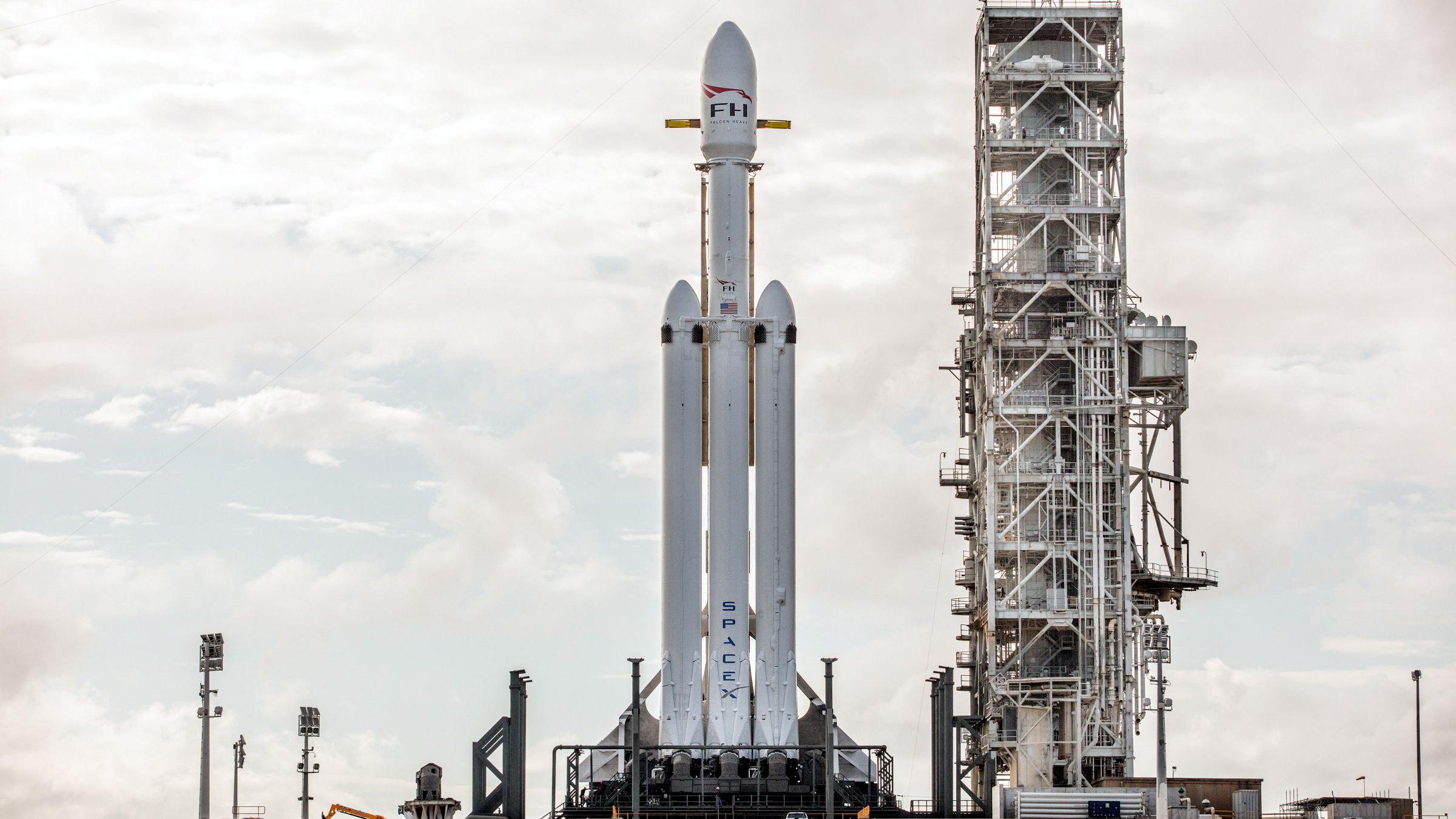
Few rockets demand as much coordination as Falcon Heavy. Comprising three modified Falcon 9 first stages—27 Merlin engines firing in unison—it creates extreme aerodynamic and structural loads during ascent.
One common misconception? That it's "just three Falcon 9s strapped together." In reality, the core differences are profound:
- The center core is structurally reinforced to handle side-mounted thrust and asymmetric loads.
- Avionics are upgraded to manage asynchronous engine shutdowns and cross-feed monitoring.
- Ground systems require triple the propellant flow and complex ignition sequencing.
Even sound suppression is a challenge. The combined acoustic energy at ignition can damage nearby infrastructure—which is why SpaceX uses deluge systems that flood the pad with 300,000 gallons of water seconds before engine start.
Past missions have revealed subtle failure points. In the Arabsat-6A launch, one side booster's pneumatic system failed during landing, causing it to tip over after touchdown. Lessons like these have driven iterative upgrades—especially in pyrotechnic stage separation systems and grid fin hydraulics.
This 2024 flight will test newer titanium grid fins on the center core, which resist higher re-entry temperatures than the previous aluminum versions. If successful, expect wider rollout across Falcon 9 boosters.
What Happens After Liftoff?
The first six minutes of flight are the most intense.
- T+00:00: Liftoff from Launch Complex 39A—NASA’s historic Apollo and shuttle pad.
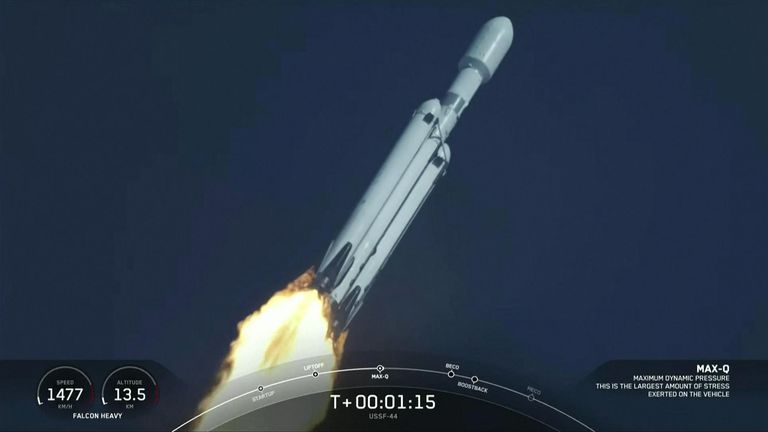
- T+00:45: Max Q, the point of peak aerodynamic pressure.
- T+02:30: Side booster cutoff (BECO). Seconds later, they peel away symmetrically.
- T+03:20: Center engine cutoff (MECO). Second stage ignites.
- T+03:30: Fairing separation, revealing the classified payload.
- T+08:00: Second burn of the upper stage to reach transfer orbit.
- T+18:00+: Payload deployment, expected over the Indian Ocean.
Unlike Starlink missions, where deployment is confirmed within minutes, classified payloads offer no real-time verification. The public may not know if deployment succeeded for days—or weeks—depending on official disclosures.
Meanwhile, recovery teams will track the center core’s descent toward A Shortfall of Gravitas, SpaceX’s East Coast drone ship, stationed roughly 400 miles downrange.
Why This Launch Could Influence Future Contracts
The U.S. military isn’t the only one watching. Competitors like United Launch Alliance (ULA) and emerging players such as Relativity Space are tracking this mission’s outcome closely.
Falcon Heavy’s performance directly impacts the National Security Space Launch (NSSL) Phase 3 procurement, where the Pentagon will award contracts for dozens of missions through 2034. SpaceX’s lower cost per kilogram—roughly $1,500/kg to GTO—compared to ULA’s $4,000+ gives it a sharp competitive edge, assuming reliability holds.
A successful launch strengthens SpaceX’s position. A failure—or even a partial one, like losing the center core—could open doors for Vulcan Centaur, ULA’s new heavy lifter.
But beyond competition, this mission reinforces a broader trend: the militarization of high-orbit space. With China and Russia testing anti-satellite weapons, the U.S. needs rapid, reliable access to space. Falcon Heavy offers both muscle and responsiveness.
Common Misconceptions About Falcon Heavy
Despite its fame, confusion persists.
Myth 1: Falcon Heavy is used frequently. Reality: It’s flown just six times since its debut in 2018. High operational cost and limited demand for ultra-heavy payloads keep launch rates low.
Myth 2: It’s being replaced by Starship. Reality: Starship is years away from certification for national security missions. Falcon Heavy remains the go-to for urgent heavy lifts.
Myth 3: All boosters always land safely. Reality: Only four of twelve side boosters have been recovered. This mission sacrifices two intentionally—highlighting mission-first strategy.
Understanding these nuances helps separate hype from reality in space reporting.
How to Maximize Your Live Viewing Experience
Want more than just a countdown and roar?
- Use a second screen: Pull up FlightClub.io or SpaceXTrack.com for real-time simulation.
- Enable audio commentary: The SpaceX stream includes engineer insights you won’t get on news clips.
- Watch for visual cues: The double sonic boom after booster separation is audible hundreds of miles away—if you’re near the coast.
- Avoid social media spoilers: Some users post deployment confirmations before official channels.
And if the launch is scrubbed? Don’t lose hope. Backup opportunities exist on April 28 and 29, though weather trends may shift rapidly.
Final Countdown: What’s at Stake
April 27 isn’t just another launch date. It’s a statement.
SpaceX is proving that even during a pause, readiness remains high. The company maintained booster storage in climate-controlled hangars, conducted static fire tests weeks in advance, and coordinated with Air Force range controllers to minimize delays.
For observers, this is more than a rocket launch. It’s a display of how private enterprise and national defense now move in lockstep—pushing the boundaries of what’s possible in orbit.
As evening falls over Florida’s Space Coast, cameras will focus on a towering column of steel and flame. When Falcon Heavy roars to life again, it won’t just carry a classified payload. It’ll carry expectations—of reliability, innovation, and the next era of American space dominance.
Stay tuned. Watch live. And remember: in space, every second counts.
FAQ
When is the Falcon Heavy launching? The launch is scheduled for April 27 at approximately 6:40 PM EDT, with a 30-minute window.
Where can I watch the Falcon Heavy launch live? Stream it on the official SpaceX website, SpaceX’s YouTube channel, or via Space.com’s live coverage.
Why hasn’t Falcon Heavy launched in 18 months? Demand for heavy-lift missions is low, and national security payloads take time to prepare. This mission, USSF-52, required extended integration.
Will the boosters land? The two side boosters will not attempt recovery. The center core will try to land on the drone ship A Shortfall of Gravitas.
What is the payload? The primary payload is classified, funded by the U.S. Space Force. It likely includes experimental tech for space domain awareness.
What happens if the launch is scrubbed? Backup opportunities exist on April 28 and 29. Delays are often due to weather or technical checks.
How powerful is Falcon Heavy compared to other rockets? Only NASA’s SLS is more powerful. Falcon Heavy generates 5 million pounds of thrust at liftoff, capable of lifting 64 metric tons to LEO.
FAQ
What should you look for in SpaceX Readies Falcon Heavy Launch After 18-Month Hiatus? Focus on relevance, practical value, and how well the solution matches real user intent.
Is SpaceX Readies Falcon Heavy Launch
After 18-Month Hiatus suitable for beginners? That depends on the workflow, but a clear step-by-step approach usually makes it easier to start.
How do you compare options around SpaceX Readies Falcon Heavy Launch After 18-Month Hiatus? Compare features, trust signals, limitations, pricing, and ease of implementation.
What mistakes should you avoid? Avoid generic choices, weak validation, and decisions based only on marketing claims.
What is the next best step? Shortlist the most relevant options, validate them quickly, and refine from real-world results.