A biopic should do more than recount a life—it should illuminate it. The Michael Jackson movie, despite its high-profile subject and deep-pocketed backing, fails at this fundamental task. Instead of offering clarity, context, or emotional depth, it delivers a sanitized, emotionally hollow narrative that avoids hard truths while mythologizing a man already shrouded in controversy. For a film about one of the most scrutinized figures in modern history, that’s not just disappointing—it’s a dereliction of duty.
A Biopic Should Reveal, Not Shield
At its core, a biographical film owes a responsibility to its subject and audience: to reveal who a person truly was, not just who they were portrayed to be. Michael Jackson’s life was a paradox—global adoration paired with intense personal isolation, artistic genius shadowed by damaging allegations, and a public image meticulously maintained at great personal cost.
The movie sidesteps all of this complexity. Rather than wrestling with the contradictions, it retreats into nostalgic montage and performance highlights, as if Jackson’s artistry alone justifies narrative evasion. We see dance sequences, studio sessions, and red carpet moments, but what’s missing is why these moments mattered. What was he feeling? What was he running from? What internal storms shaped the man behind the glove?
This isn’t reverence—it’s evasion.
The Problem of Estate Involvement
One of the most glaring reasons the film fails is clear: the Michael Jackson estate’s heavy involvement. When the people most invested in protecting a legacy control the narrative, truth often becomes collateral damage.
Compare this to Elvis, Baz Luhrmann’s 2022 biopic. While stylized, it didn’t flinch from Elvis Presley’s exploitation by Colonel Tom Parker, his drug dependence, or his emotional fragility. The result was a flawed but honest portrayal—one that honored the music while acknowledging the cost.
The Jackson movie, by contrast, treats the 1993 and 2005 allegations as background noise, brushed aside with a single courtroom clip and no emotional follow-up. There’s no exploration of how these accusations impacted Jackson’s psyche, relationships, or creative output. It’s as if the film assumes admiration for his talent should erase the need for accountability.
That’s not a biopic. That’s a PR campaign.
What a Jackson Biopic Should Have Explored
A truly effective biographical film would have used Jackson’s life to examine broader themes: the cost of child stardom, the racial dynamics of fame in America, the isolation of unparalleled success, and the machinery of image control in celebrity culture.
Consider the possibility of showing:
- The psychological impact of being thrust into global fame at age 6 with The Jackson 5
- The physical and emotional toll of constant touring, public scrutiny, and media distortion
- The evolution of his appearance and how it reflected deeper identity struggles
- The tension between his desire for privacy and his need for audience adoration
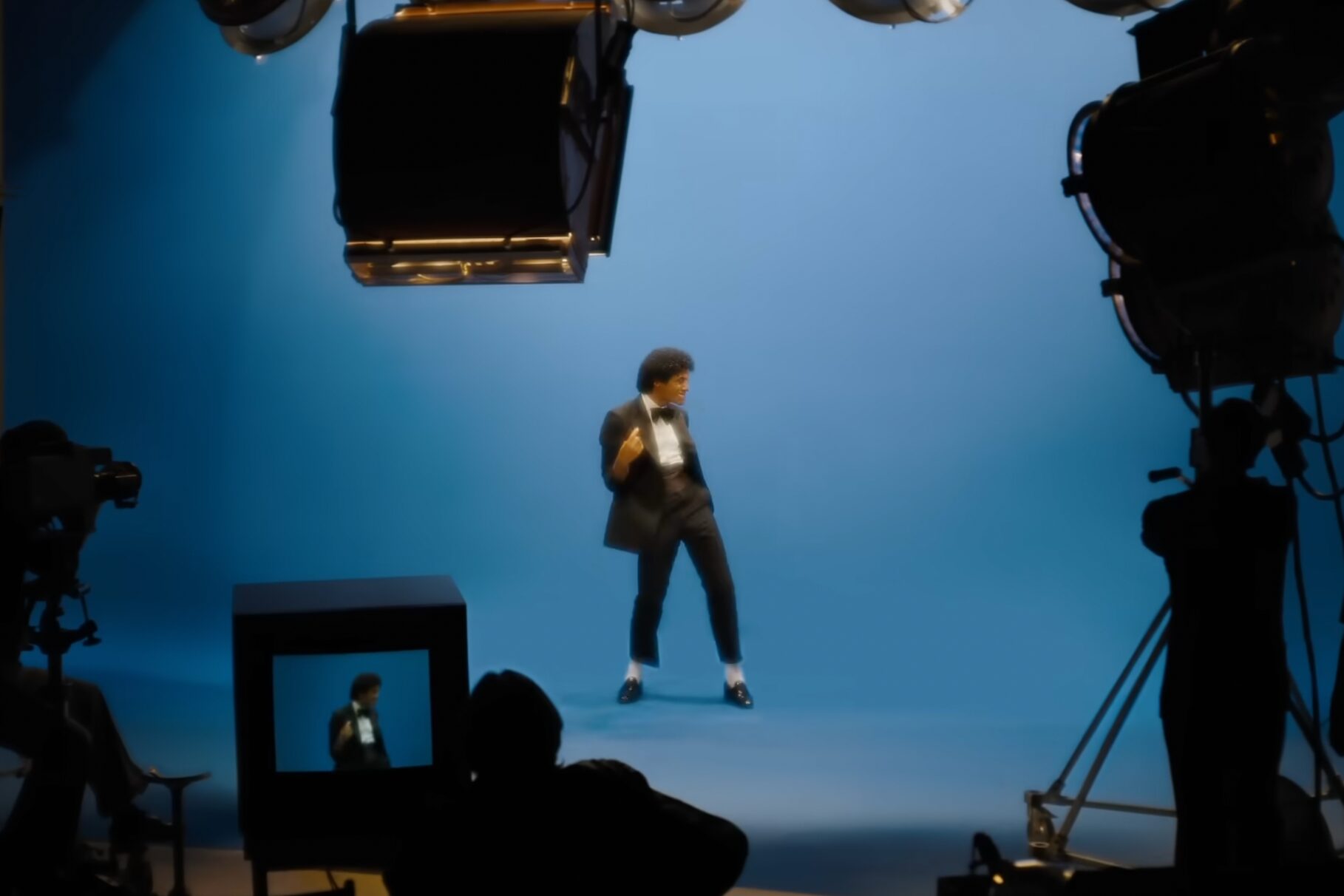
Instead, the film treats Jackson as a myth, not a man. We get the spectacle, but not the soul.
Style Over Substance, Again
There’s no denying the film looks good. The recreations are polished, the costumes meticulous, and the musical performances are technically impressive. At times, it feels like a high-end tribute act with a Hollywood budget.
But visual fidelity isn’t storytelling. You can replicate the moonwalk perfectly and still miss the point entirely.
The film leans heavily on concert footage, music videos, and archival audio—tools that evoke memory but demand no insight. It’s the cinematic equivalent of a greatest hits album: enjoyable for fans, but offering no new perspective.
Worse, it uses Jackson’s own narration (drawn from old interviews and voice recordings) as a framing device. This might have worked if it were balanced with outside perspectives—friends, collaborators, critics. But it’s presented as divine testimony, never questioned or contextualized.
When a biopic treats its subject’s words as scripture, it stops being journalism and starts being hagiography.
The Silence That Speaks Volumes
Perhaps the most damning flaw is what the movie doesn’t say.
There’s no mention of Wade Robson or James Safechuck, the two men who gave detailed, sworn testimony about abuse in the 2019 documentary Leaving Neverland. The film doesn’t engage with the cultural shift that followed—how millions reevaluated Jackson’s legacy not out of malice, but out of empathy for survivors.
Instead, their stories are erased. Their existence is treated as irrelevant. That’s not just bad filmmaking—it’s a moral failure.
A biopic doesn’t have to convict or exonerate. But it must acknowledge. By refusing to even name the allegations’ impact on public perception, the film pretends Jackson’s legacy exists in a vacuum—one scrubbed clean of discomfort.
Why This Failure Matters Beyond Jackson
The shortcomings of this film aren’t just about one artist. They reflect a larger trend in celebrity biopics: the prioritization of legacy protection over truth-telling.
Hollywood increasingly greenlights biopics only when estates approve, ensuring control over image. The result? A wave of glossy, emotionally neutered films that celebrate talent while dodging trauma.
Think of A Complete Unknown (rumored Dylan biopic with estate involvement) or the upcoming Whitney Houston film, produced by her family. Will they confront addiction, industry exploitation, or personal demons—or will they offer another “greatest hits” narrative?
The Jackson movie sets a dangerous precedent: that fame earns you immunity from interrogation. That artistry absolves complexity. That audiences will accept spectacle in place of substance.
What a Better Jackson Biopic Would Look Like
Imagine a film that begins not with “ABC,” but with Jackson at age 12, being slapped by his father after a wrong note. A film that shows him rehearsing for hours, crying from exhaustion, then stepping onstage with a smile.

Imagine a scene where, after the 1984 Pepsi burn, Jackson first sees his scarred scalp—then quietly asks his doctor about skin bleaching, unsure whether it’s medical or racial shame driving him.
Picture a quiet moment in Neverland, where Jackson reads Peter Pan aloud to a group of boys, his voice soft with longing—not for them, but for the childhood he never had.
That film would be painful. Unsettling. Maybe even controversial.
But it would be true.
It would honor Jackson not as a god, but as a deeply wounded artist who changed music forever—despite, and sometimes because of, his scars.
The Duty of Storytelling
Biopics are not documentaries. They don’t need to be legally airtight. But they do need to be emotionally honest.
The duty of a biopic is to help us understand—to connect talent to trauma, fame to fragility, genius to grief. The Michael Jackson movie doesn’t do that. It confuses admiration for insight, and nostalgia for narrative.
It’s not the first time Hollywood has protected a legacy at the cost of truth. But Jackson’s story deserves more than another polished evasion. His life was too complex, too contradictory, too culturally significant to be reduced to a two-hour highlight reel.
We don’t need another tribute. We need reckoning.
And until that happens, the King of Pop will remain an icon—but never fully seen.
FAQs
Why is the Michael Jackson biopic considered a failure? Because it avoids difficult truths about Jackson’s life, particularly the abuse allegations, in favor of a sanitized, estate-approved narrative that prioritizes image over insight.
Was the Michael Jackson estate involved in the movie? Yes, heavily. Their involvement is widely seen as the reason the film avoids controversial topics and presents a one-sided portrayal.
Does the movie address the abuse allegations? Only minimally and dismissively. It includes brief courtroom footage but offers no real exploration of the claims or their impact on Jackson’s life and legacy.
How does this biopic compare to other music biopics like Bohemian Rhapsody or Elvis? Unlike Elvis, which confronts Presley’s exploitation and personal struggles, or Bohemian Rhapsody, which—despite flaws—engages with Mercury’s identity and sexuality, the Jackson movie shies away from conflict and complexity.
Could a truthful Michael Jackson biopic ever be made? Yes, but not with estate cooperation. It would require independent filmmaking, survivor testimonies, and a willingness to sit with ambiguity—something current Hollywood structures often discourage.
Is it possible to separate the art from the artist in a biopic? Not fully. A biopic’s job is to show how the art and artist are intertwined. Ignoring the artist’s controversies doesn’t protect the art—it undermines the film’s credibility.
What should a Michael Jackson biopic have focused on? Child stardom, racial identity, psychological isolation, the mechanics of fame, and the tension between public image and private reality—all themes central to his life but absent from the film.
FAQ
What should you look for in The Michael Jackson Movie Fails at the Basic Duty of a Biopic? Focus on relevance, practical value, and how well the solution matches real user intent.
Is The Michael Jackson Movie Fails at the Basic Duty of a Biopic suitable for beginners? That depends on the workflow, but a clear step-by-step approach usually makes it easier to start.
How do you compare options around The Michael Jackson Movie Fails at the Basic Duty of a Biopic? Compare features, trust signals, limitations, pricing, and ease of implementation.
What mistakes should you avoid? Avoid generic choices, weak validation, and decisions based only on marketing claims.
What is the next best step? Shortlist the most relevant options, validate them quickly, and refine from real-world results.